Empire of Instability, Part I
America as the Leading Exporter of Third-Worldism
— By RJ Chizmadia22 min
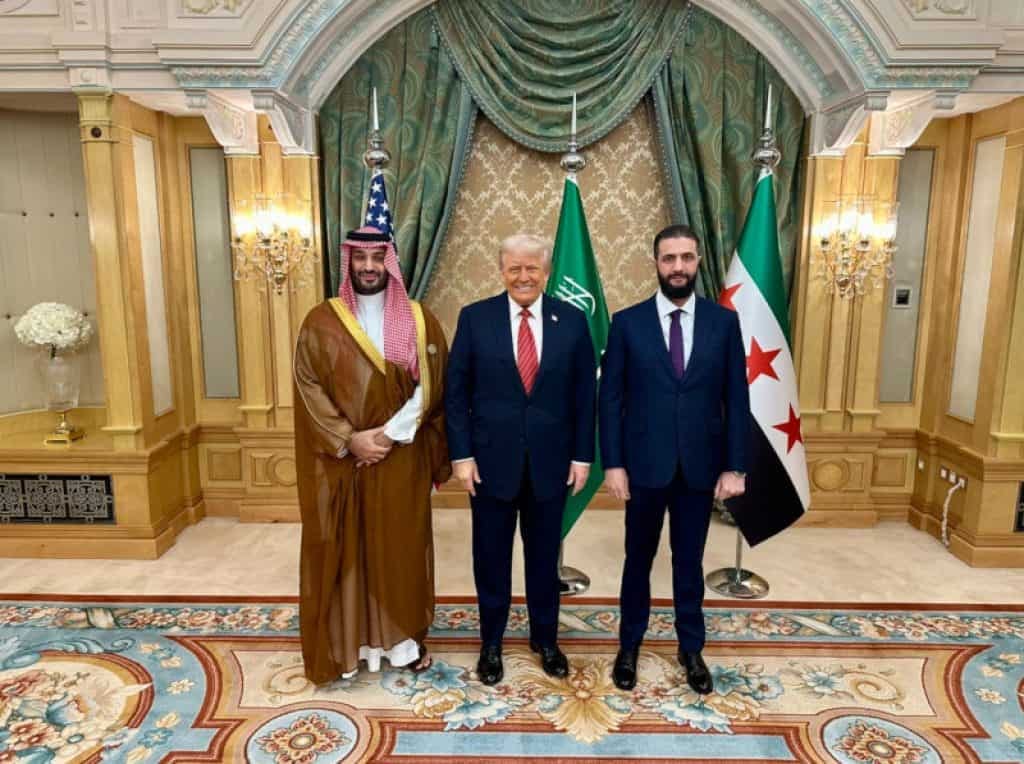
When the Syrian government fell in December 2024, Washington had reason to celebrate, but the country it had spent years trying to change scarcely resembled a prize. Its industrial base had contracted, millions of Syrians lived abroad and the army that once held the state together had given way with remarkable speed. Turkey's clients entered Damascus behind HTS, while American officials began talking to a leadership whose origins in al-Qaeda's Syrian branch they had spent years treating as a threat to civilization. The speed of that reversal tells us something about how the United States judges legitimacy. Syria's condition tells us more about what happens while the judgment is being enforced.
America's wars often end without the stable governments promised at their outset. That failure has never prevented Washington from exercising power over the ruins. When national institutions can no longer pay salaries or defend a border, political authority moves toward the foreign patron able to finance a faction. Creditors gain an audience that a functioning state could have refused. Contractors acquire work that public institutions once performed. People leave because their country has lost the means to offer them a life. By the time the displaced arrive in Europe, the sequence has usually been compressed into a story about boats and borders, as though nobody had a hand in making the country they fled unlivable.
The wars Washington launched or joined after 9/11 displaced at least 37 million people by one conservative estimate. The Costs of War researchers who arrived at that figure argued that the real total might run as high as 48 to 59 million. Another study estimated 4.5 to 4.7 million direct and indirect deaths in post-9/11 war zones. The dead include people killed long after a particular battle ended, when a broken health system could no longer keep them alive.
That is the meaning of third-worldism as an imperial export. It is the replacement of national authority by permanent dependency, with the social cost pushed onto people who had no part in choosing the policy. Some of the profits are obvious. A government buys weapons before it destroys a city and then pays a contractor to secure what remains. Other benefits arrive more slowly, through credit extended to the successor state or the skilled labour that reaches a richer country after the local economy collapses. The institutions do not need to agree on a grand design. Each finds a use for the damage.
Washington's claim to defend a rules-based order depends on the fiction that its judgments of other governments begin with how those governments treat their people. Saudi Arabia has never needed elections to enjoy American protection. Pakistan continued to matter to Washington through military rule and through its intelligence service's dealings with militants. Turkey kept its position in NATO while Erdoğan sponsored armed terrorist factions in Syria and turned refugees into leverage against European governments. An ally's abuses can be managed; a government capable of refusing American direction discovers that its sovereignty is conditional.
One can see the difference in Washington's dealings with Saddam Hussein. His government was brutal when Iraq fought Iran, yet it received American support because weakening revolutionary Iran served the regional order. Iraq's invasion of Kuwait changed its assigned place in that order. Sanctions followed the war, and after the invasion of 2003 Washington dismantled much more than the presidency. Qadhafi, too, had spent years trying to come in from the cold before NATO helped destroy his state. An accommodation with the West could not give him the security that obedience was supposed to buy.
Iran presents the enduring offence. It maintains an independent military and supports armed movements that can impose costs on Israel. It has also preserved regional relationships beyond Washington's command, which means American power cannot simply dictate the political outcome in Iraq or Lebanon. The Houthis confront the same hierarchy from Yemen. Its terrorist designation has changed with American diplomatic priorities, only to return after the movement attacked shipping and fired toward Israel. The label tells us less about a fixed moral category than about the conflict in which Washington wants the label to operate.
The opposite journey was made by HTS. It’s origins in Al-Nusra Front had belonged to al-Qaeda, and its successor retained much of the military power built during Syria's civil war. Once HTS led the coalition that removed Assad, Washington revoked its terrorist designation. The earlier associations of the now president of Syria did not suddenly vanish; they became compatible with the government's place in a new regional balance. The transformation of an outlaw into a statesman required a change in Washington's interests, not a new biography.
This selective legitimacy gives American power something the Soviet Union once demanded more openly from its neighbours. A people may retain its country and elect a different government so long as its strategic choices stay within limits set elsewhere. European parties compete for office, but a victorious party is expected to keep the American alliance, host its infrastructure and pay for its wars. If Washington sanctions an adversary, European industry absorbs part of the damage. A change of leadership can alter the tone of obedience without giving the country a way out of it.
There is a difference between the two empires that helps explain the destruction left by the newer one. Moscow held down its satellites and crushed revolts, but it generally needed working administrations. The state had to collect revenue and the army had to keep order. Industry gave the bloc the means to sustain itself. Washington can live with a more precarious arrangement because private institutions are able to profit from the loss of those very capacities. Weak ministries need advisers, ruined infrastructure needs contracts and an indebted successor government needs permission to borrow. The state grows less capable of refusal as its needs become more urgent.
This is visible in the documents that opened America's long Afghan war. A presidential finding of July 3, 1979 authorized CIA support for insurgents against the Soviet-backed government in Kabul, months before Soviet troops entered Afghanistan. The early funding was modest and initially directed toward cash, nonmilitary supplies and propaganda. Its importance lay in the political decision. Washington had found an insurgency through which it could make its Cold War rival pay for defending an ally. Kabul's rulers had imposed change with force and made enemies among the people they claimed to emancipate. Their land reforms and campaign for literacy nevertheless belonged to a project of state construction. Washington answered that state with forces whose politics ran in another direction. Pakistan decided which Afghan factions gained access to the foreign pipeline. Saudi money enlarged the war, and Saudi religious institutions helped give it a language that could draw recruits from outside Afghanistan. The United States supplied weapons after the Soviet invasion and made the conflict a major theatre of its confrontation with Moscow.
The resulting movement was larger than any of its sponsors. Osama bin Laden did not need to be an American agent for the Afghan war to shape the organization he built. Fighters met one another there. Money passed through channels created for the jihad and recruiters learned that a local civil war could become a cause for Sunni Muslims thousands of miles away. When Soviet troops withdrew, that experience did not disappear with them. It travelled with the veterans, some of whom turned toward the governments that had helped open the battlefield.
Saudi Arabia was protected from the full political implications of this history by its usefulness to Washington. Its religious outreach received support through institutions that built mosques abroad and supplied teaching material to schools. A US government review later examined that network and the concern that some Saudi-funded activities promoted religious intolerance or Islamic extremism. All though the 9/11 Commission found no proof that the Saudi government as an institution or senior Saudi officials financed al-Qaeda. It did identify Saudi Arabia as a major source of private funds for the organization. The distinction did not disturb the bargain that allowed the monarchy to remain a pillar of American power while militants drew on money from inside the kingdom.
Oil kept the relationship valuable, but it was never only an oil transaction. The monarchy bought American weapons and opposed Iran. It gave Washington a position in the Gulf that an independent regional government might contest. Pakistan performed a comparable service farther east, directing aid through its intelligence apparatus while advancing an Afghan policy of its own. The two allies could pursue interests that produced dangers for Americans because Washington depended on them to conduct the larger contest.
That is how an empire can help build the conditions for a militant movement and later fight the movement itself. Its officials do not have to desire the blowback. They only have to keep making the alliance profitable enough to tolerate the risk. The doctrine exported by Saudi institutions and the fighters favoured by Pakistani intelligence attacked the idea that citizenship should stand above sect. In a country where that idea fails, a political dispute can become a struggle over which community may live under the protection of the state. Foreign patrons then obtain a way into every quarrel.
Muslims themselves paid much of the price. Al-Qaeda in Iraq bombed Shia worshippers because it wanted the retaliation that would turn neighbours into rival camps. Sunni opponents of jihadist rule could be condemned as apostates. Christians and Yazidis lost places in societies whose public institutions had once offered at least some defence against the armed men speaking in the name of religion. Treating the result as an undifferentiated clash between Islam and the West hides what sectarian war does inside a Muslim country. It also lets the governments that helped arm and finance its factions pass themselves off as guardians against extremism.
Bosnia brought veterans of the Afghan jihad into a European war with a very different history. Bosnian Serb forces had besieged Sarajevo, conducted ethnic cleansing and murdered thousands of Bosnian Muslim men and boys in eastern Bosnia. Serb civilians were also killed, expelled from their homes, and Serb prisoners abused in the same war. Those crimes stand regardless of who fought on the other side. Yet foreign mujahideen from the earlier war in Afghanistan did join the Bosnian Army, eventually serving in a unit of their own. The international tribunal for the former Yugoslavia convicted Bosnian commander Rasim Delić for failing to prevent cruel treatment by members of the unit against captured Serb soldiers. Washington wanted the Bosniak-Croat Federation to break Bosnian Serb power, and the foreign militants were tolerated as part of a broader coalition that could help bring the war to an end on American terms. Iranian arms reached the Bosnian government under an embargo while the Clinton administration declined to stop shipments moving through Croatia. After The Dayton Agreement officially ended the three and a half-year Bosnian War, the United States sought to remove Iranian influence through its own Train and Equip Program. Tehran's help had value when it sustained a favoured side; once that side had survived, Washington wanted it to depend on American weapons. The difference between a useful outsider and a dangerous one could be settled after victory.
In Iraq, the United States created a political opening that no proxy war could have produced. It invaded the country and then dismantled institutions that might have kept armed men inside an Iraqi chain of command. Coalition Provisional Authority Order No. 1 removed Baathists from public office. Order No. 2 dissolved the army along with other state bodies. The decisions threw men trained to fight into a country whose new political order was being built without them. Sectarian allocation made the rupture deeper. Ministries became the property of parties claiming to protect particular communities, and those parties looked abroad for backing. The citizen who had once needed a functioning national administration now needed a communal broker. Abu Musab al-Zarqawi the leader of al-Qaeda in Iraq saw the opportunity. By attacking Shia civilians, al-Qaeda in Iraq sought a civil war in which its claim to defend Sunnis would acquire force. The organization survived its founder and eventually provided the lineage from which ISIS emerged. When ISIS took Mosul in 2014, American troops returned to fight the product of an insurgency that had grown beneath the occupation.
Iran benefited from the same power vacuum that empowered the jihadists. Iraqi parties tied to Tehran gained influence after Saddam's state was destroyed, and their militias became important in the later fight against ISIS. The invasion that was supposed to reorder the Middle East in Washington's favour enlarged the reach of Washington's principal regional adversary. American power could devastate an independent Iraq. It could not guarantee that the successor would belong to America.
Libya demonstrated another form of that failure. NATO intervened under a civilian-protection mandate and became the decisive air force in a war to remove Qadhafi. A British parliamentary inquiry later found that the operation shifted toward regime change while its advocates failed to anticipate the political collapse that followed. Militias kept their weapons after the old government fell because no replacement authority could make them hand the weapons over. The state arsenals fed conflicts beyond Libya, and traffickers acquired room to operate along the route toward the Mediterranean. Qadhafi had warned Europe what would happen to migration if his government stopped policing the route. Europe discovered that the route still existed when the state did not. Armed groups could extort Africans trying to reach the coast and turn illegal immigration into a business. European governments that once negotiated with Libya over the frontier faced a country divided among rival authorities. The people whose lives had supposedly been saved from danger in Benghazi were left under militias that no NATO mandate had a plan to disarm.
The clean appearance of an air campaign depends on when the audience stops watching. The first explosions can be counted from a cockpit. Nobody can count the full effect of a state arsenal opening into a region already under strain. Libya lost the authority to keep its territory from becoming a passage for other wars, while Europe acquired a migration crisis its own alliance had helped create. The war was brief for the governments involved and prolonged for everyone living beneath the aftermath.
Syria followed its own course. The conflict began amid domestic revolt against an authoritarian government and became a civil war in which foreign powers could pursue their objectives through Syrian factions. Washington called for Assad to leave, recognized opposition representatives and imposed sanctions. Ankara opened space for armed groups along its border while Gulf money strengthened some of the terrorists. Assad's own government answered rebellion with violence and then survived for years through Iranian and Russian support. It also faced an armed insurgency that splintered into rival militias and jihadist forces, and it kept the backing of Syrians who feared state collapse and Islamist rule more than they wanted the existing order gone. Neither its repression nor its foreign backing removes the American role in worsening the struggle. Both help explain why Syria could not be reduced to a story of a single outside hand pulling every string. After the government recovered much of the country, it still lacked the resources to rebuild it. The educated people who had fled could not be replaced by declaring military victory. Sanctions impeded trade and the treasury could not restore ordinary services, while corruption inside the state made scarcity harder to bear. The World Bank estimated that Syria's economy had contracted by more than half since 2010. Such a government might hold a front for years and still be unable to make its soldiers believe that another campaign would lead anywhere.
HTS exploited that exhaustion, but it did not begin its final offensive as an American division under another flag. It grew from the Al-Nusra Front and fought within a northern enclave sustained in part by Turkey's control of access. Its leadership understood that continued survival required changing how it dealt with other Syrian factions and foreign governments. When Assad's defences gave way in 2024, Washington moved to work with the winner because it preferred a post-Assad Syria to one anchored in the Iranian regional network. Turkey had its own reasons for wanting that outcome and its own claims on what should follow. The difference surfaced in northeastern Syria. American forces had partnered with the Kurdish-led Syrian Democratic Forces against ISIS. Turkey regarded the movement's leading Kurdish component as an extension of the PKK and wanted it disarmed, even while Washington still depended on it. The two NATO allies were therefore pressing against opposite sides of the Syrian battlefield. Ankara could assist in removing an American adversary in Damascus and still attack an American partner elsewhere. Calling Turkey a proxy misses the power it had accumulated by becoming indispensable to more than one camp.
The new authorities in Damascus inherited that problem along with the ruins of the economy. Washington accepted a plan in 2025 to integrate roughly 3,500 former foreign jihadist fighters into the Syrian armed forces. Years of warnings about the danger of foreign militants yielded to the need to build a government that could enforce its authority. The change did not make those men's pasts imaginary. It made them negotiable once their commander held the capital.
Nor did removing Assad restore to Syrians control over everything the war had broken. Turkey still held influence through northern armed factions. The United States retained its Kurdish partnership while negotiating with a government that wanted a unified state. Israel moved against Syrian military assets and deepened its position on Syrian territory after Assad's fall. The same powers that had demanded a different government continued to make their own security claims on the country. A new flag over Damascus cannot by itself pay a teacher or decide who controls the border.
Turkey's place in this history reveals the limits of American command more clearly than its obedience does. Erdoğan has kept NATO's strategic advantages while dealing with Russia and Iran when Ankara benefits. In Syria Turkey was willing to work toward an outcome Washington wanted without granting Washington the right to decide the Kurdish question. He could bargain with Russia while Turkish-backed formations fought a government Russia had supported. The arrangement was unstable, but that instability increased Turkey's value to every power hoping to secure something from it.
Europe faced the same Ankara from a weaker position. Turkey held millions of Syrian refugees and controlled the land route many used to reach the European Union. The 2016 agreement offered an initial €3 billion, followed by another €3 billion, as part of a deal over migration control. Money was only part of the price. Erdoğan had learned that European governments feared losing control of their border, and he could put that fear on the table whenever relations deteriorated. In 2020 Ankara encouraged migrants toward Greece after saying it would stop restraining their passage. People uprooted by Syria's war became instruments in a dispute between Turkey and Europe. The European states involved had joined the American alliance's policy toward Damascus, then found themselves paying a member of that alliance to contain part of the human aftermath. Turkey's room to manoeuvre was made possible by the very dependency that supposedly gave Washington and NATO control over it.
Iran occupied a different place in the Syrian struggle. Its support helped Assad survive an insurgency that included organizations aligned with al-Qaeda. When ISIS overwhelmed the Iraqi army in 2014, Iranian aid helped Baghdad resist and allied Iraqi forces later fought to recover territory. Hezbollah's intervention on Assad's side was also bound up with its effort to preserve the route between Iran and Lebanon. Washington could recognize the part these forces played against jihadists and still oppose the regional network they protected, because that network could restrain Israel and refuse an American settlement.
The claim that all Islamist militancy belongs to one camp has never survived contact with these facts. Hamas, the Houthis, the Taliban and HTS have differed sharply in their politics and foreign relations. Washington's judgments of them have also moved with strategic circumstances. Turkey's Sunni politics have not prevented it from trading with Russia. Iran has found common cause with Sunni movements against Israel. The attempt to read every conflict from a group's religious label obscures the bargain each government is trying to make and the opponent it is trying to weaken.
What remains consistent across the wars is the movement of authority out of the countries that bear the damage. Sanctions deny a government access to commerce and make its citizens poorer. Fighting tears up the revenue base that might have supported independent policy afterward. The successor administration must find money to reopen schools or repair a power station. That need lets lenders and foreign contractors impose conditions that would have been harder to demand before the war. Reconstruction can replace a destroyed wall while transferring control over what stands behind it. The rewards are distributed across time, which makes the relationship harder to see. Weapons producers receive public money before the fighting begins. Security firms find work when the army has broken down. The new authorities borrow abroad because domestic taxation no longer covers even basic functions. A foreign employer can later hire the engineer whose education the damaged country paid for. No ledger places these transactions on the same page, yet each draws value from an earlier loss of national capacity.
The Soviet Union's system also extracted resources from countries beneath it, and its pretence of fraternity did nothing to make domination humane. It still depended on keeping enough production and public administration in place to hold the bloc together. American finance has greater freedom to treat the destruction of a settled society as an opening. Public assets can be sold once a government loses the means to maintain them. A family that loses work at home becomes available to employers abroad. The money made from the aftermath does not have to return to the country that bore it.
Migration makes that last exchange visible. A Syrian physician or Iraqi engineer arrives with years of training paid for elsewhere. The receiving economy gains a skilled worker while the country that needs a hospital or electricity grid loses someone who might have helped rebuild it. Less skilled workers are recruited under a similar logic. Employers acquire a wider labour pool and can postpone wage increases or training. The host public must provide housing capacity and services, while a ruined country must somehow recover after losing the people it educated.
The argument is usually settled before those costs can be discussed. Capital's demand for a mobile workforce is recast as a test of personal virtue. People who bear pressure on rent or compete for work are told that describing their material interest is itself disreputable. The affluent face fewer of those pressures and can purchase a way around the rest. A policy that moves labour in response to employer demand is therefore defended in the language of compassion by institutions that do not pay its full social cost.
There is an even deeper political effect. Washington speaks readily of collective identity when it needs to understand another country's war. Kurds have a territory and a historical claim. Bosniaks have memories that cannot be wished away by drawing a new border. American officials write settlements around Sunni and Shia power because they understand that people experience political danger as members of communities as well as individuals. Yet the European populations expected to receive the consequences of American wars are told that their own historical continuity carries no legitimate political claim. The American creed supplies an answer to anyone troubled by the contradiction. It defines a nation as a set of propositions, so that replacing the population need not be treated as a change in the nation at all. The same view is urged on Europe, where governments can invoke a people's culture on a commemorative holiday and dismiss the people's claim to determine its future the following morning. Their ancestry is tolerated as history but treated as a threat when it becomes a reason to defend political control.
That asymmetry serves a material purpose. A public confident that a country belongs to it may refuse the sale of its infrastructure or demand that industries be maintained even when investors would rather move them. It may also insist on determining the scale of immigration instead of allowing employers to decide it through hiring. Once the public is taught that national attachment itself is suspect, those choices move into administrative hands. Elections survive, but an important part of what people once thought they were voting for has been removed from debate.
The displaced are caught in the same arrangement. A Syrian family may receive safety in Europe while losing the country in which its language, profession and relatives once gave daily life its shape. The receiving community is ordered to absorb consequences it had little power to prevent. Neither gains from pretending that permanent exile is the only compassionate answer. There is a difference between protecting people who cannot safely go home and constructing an economic order that has no interest in making return possible. Restoration would threaten too many arrangements now built around the injury. A stable Libya would leave less work for the armed groups charging migrants for passage. A sovereign Iraq would be less dependent on foreign troops and foreign advisers. Syrians able to rebuild at home would no longer be available as a permanent answer to another country's labour shortage. The prospect of voluntary return requires more than telling refugees to leave; it requires the restoration of security and the economic means to live when they arrive.
This is why the usual humanitarian argument begins too late. It asks Europe what to do with a person at the border while treating the political decisions that destroyed his home as closed history. The same leaders who backed a war can demand unlimited moral seriousness from the people who must live with its aftermath. Meanwhile, the question of stopping the war, ending the strangulation of a civilian economy or helping people rebuild a state seldom receives the same urgency.
Afghanistan, Bosnia, Iraq, Libya and Syria cannot be pressed into an identical script. The Soviet intervention in Afghanistan had its own brutality. Bosnia's Serb forces committed crimes that NATO did not invent. Assad's government was weakened by repression and by failures of its own, and Turkey pursued an independent policy that Washington could neither design nor fully control. Those facts make the imperial pattern more revealing. American power does not need to be the sole cause of a conflict to redirect it, profit from the vulnerabilities it opens and leave others to carry the bill.
The pattern is particularly clear when a movement that once stood on a terrorist list enters a capital. Washington can revise its judgment because a new government may now advance American aims. The Syrian who lost a decade of life to war cannot revise the cost in the same way. A European government can sign an agreement with Turkey to slow the refugees, but it cannot buy back the Syrian state that collapsed while it followed the alliance into the conflict. The decisions made at the imperial centre travel outward and become somebody else's permanent circumstances.
The American bloc is a new Soviet Union in its demand for strategic obedience, though it uses markets and credit where the old bloc relied more directly on party command. Its deeper intrusion lies in its ability to make the loss of national capacity look like an investment opportunity and the loss of population look like a labour solution. A country may keep its flag while its public wealth changes hands. Another may keep its parliament while its historic people are told that wanting to govern their future is a moral offence.
Part II will examine the economic and demographic machinery that extends this system after the war. It will follow the destruction of colonial monopolies into the rise of financial empire, then show how debt and tied aid converted formal independence into another kind of dependence. It will also examine the extraction of skilled workers and the use of mass immigration as a labour regime.
Washington’s empire rests on two incapacities. The first belongs to the country it has broken, which can no longer govern itself. The second belongs to the Western country ordered to receive the consequences, which has been taught that refusal is immoral. Between them lies the field on which the system profits.
Instability is not merely the price the new Soviet Union pays for power. It is the condition in which that power works best.