The Separatists Who Would Sell Alberta to Washington
Ottawa has helped drive Alberta toward separation. Pledging its resources for American backing would give Washington a claim on the very wealth separatists promise Albertans will finally control.
— By RJ Chizmadia7 min
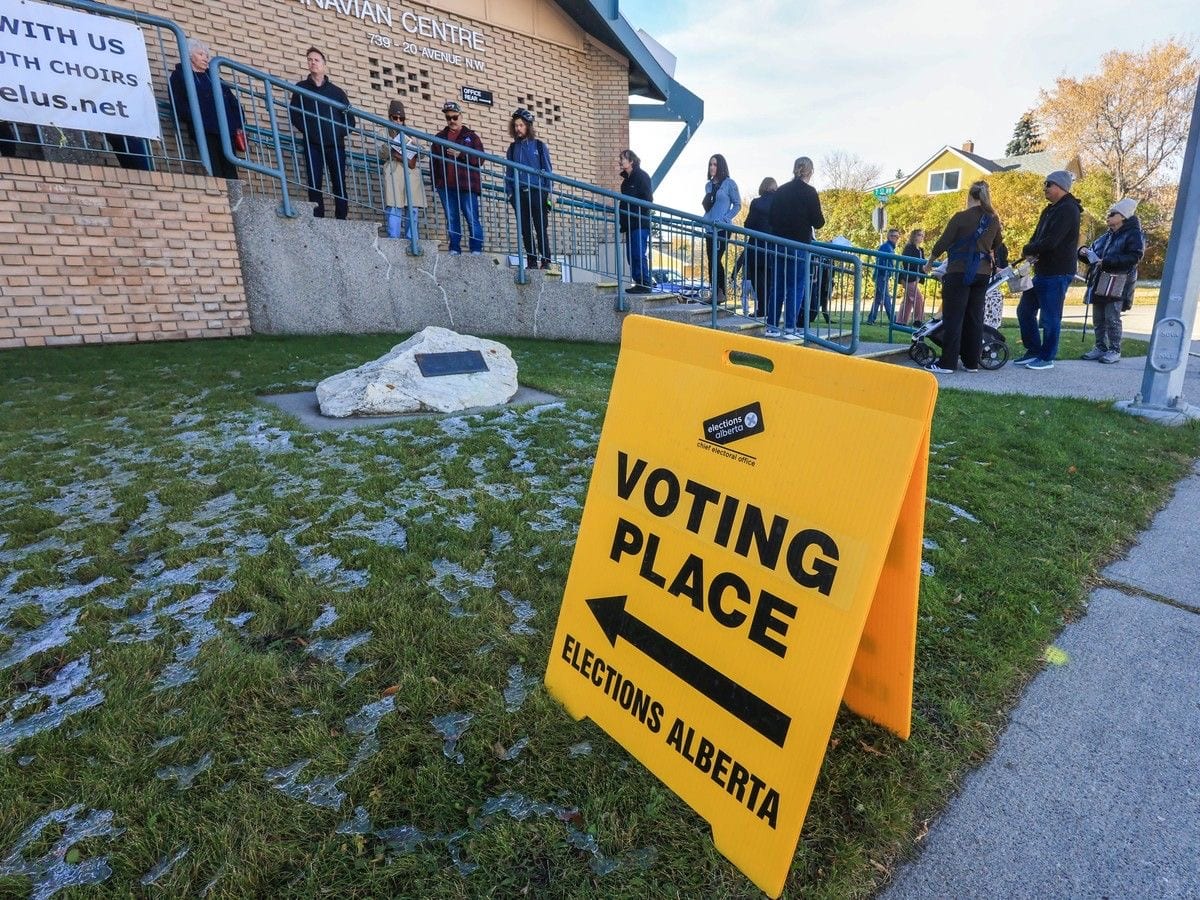
On Tuesday, nearly 175,000 Albertans voted on the first day of advance polling, while hundreds of thousands have requested special ballots ahead of the final voting day on October 19. Among the ten questions is a choice between remaining in Canada and asking the provincial government to begin the constitutional process required for a binding separation referendum. The result will be non-binding. Albertans are deciding whether their government should pursue another vote, after which even a victory for independence would still require a negotiated departure.
For now, the separatists appear headed for a heavy defeat. Leger’s October 2–4 survey found 70 percent wanted Alberta to remain in Canada, while 22 percent supported beginning the process and 7 percent were undecided. Danielle Smith’s own voters were much less settled: 48 percent of UCP supporters favoured proceeding, against 43 percent who wanted to stay. The premier has to campaign against separation while keeping a party together whose supporters lean the other way. Her government has launched a $4-million advertising campaign urging Albertans to remain in Canada, and she has promised no second separation referendum during her premiership if they do. She has also committed to pursuing the process if they vote against her position.
Smith may get the result she wants without resolving much of what brought Alberta to this point. Ottawa will distribute roughly $27.16 billion in equalization in 2026–27, including $13.9 billion to Quebec. Alberta receives none, as is also the case for Saskatchewan and British Columbia. Equalization is paid from general federal revenues, which draw heavily on Alberta’s higher incomes, while its younger population makes less use of age-related benefits. The imbalance extends well beyond that program. A compilation of Statistics Canada accounts puts the combined gap between federal revenue collected in Alberta and federal spending recorded there at about $293.5 billion from 2007 to 2024. When the government collecting that money also tries to restrict the industry producing much of the province’s wealth, resentment hardly requires a separatist to manufacture it.
Quebec’s hydroelectricity gives that resentment a particularly durable target. Equalization does not value every province’s natural resources as though their full market potential were being collected as revenue. Quebec can supply cheap electricity at home and receive payments that would fall if it charged more. A Fraser Institute analysis puts the effect in the billions. Quebec has used its publicly owned resource to make life cheaper for its residents, while Alberta has spent years fighting Ottawa over whether it can develop its own resources and get them to market. Under the federal-provincial energy agreement, Ottawa has committed to dropping the oil and gas emissions cap and suspending federal electricity regulations in Alberta. Both governments are backing a proposed Pacific pipeline. Smith can point to these gains as evidence that working within Canada produces results, though the long fight to obtain them is part of what drove people toward separation in the first place.
Working within Canada has given Quebec considerable room to defend its own interests. Its immigration accord, signed in 1991, four years before the nearly successful sovereignty referendum, gives it substantial authority over selecting economic immigrants in defence of its language and distinct society. Alberta’s nominee program gives it a say in who comes without allowing it to determine the overall scale of immigration into the province. Quebec’s arrangement demonstrates how much more authority a province can exercise without leaving Confederation, and gives Albertans reason to demand a larger say themselves.
That distinction matters when federal admission decisions arrive at the school door or add to the demand for housing. Ottawa sets national levels and controls temporary admission and asylum, leaving provincial and local authorities to accommodate the consequences. Albertans are being asked to support greater provincial control to reduce immigration to sustainable levels and give residents priority in employment. Other ballot questions would restrict eligibility for provincial services or impose waiting periods and charges on some temporary residents. These proposals have brought a dispute once associated chiefly with oil and equalization into arguments over who can obtain public services and how much taxpayers should be expected to provide when they have so little control over admissions.
Independence would put those decisions in the hands of a government Albertans could elect and remove themselves. Voters could hold it directly responsible for the numbers it admitted, rather than arguing with Ottawa over the consequences. They should make the people seeking that authority explain how they would resist the pressures that helped produce the present immigration system. Employers would still want a larger pool of workers, and landlords would still gain from more people competing for a place to live. A government willing to subordinate residents’ interests to those demands could do so after separation as readily as before it. Albertans are entitled to know whose interests would govern the new country, particularly when some of the men promoting it have been discussing its future with American officials.
Leaders associated with the Alberta Prosperity Project met State Department officials three times in 2025. According to the Globe and Mail investigation discussed by its reporters, co-founder Dennis Modry described proposals involving access to freshwater, possible oil royalties and land for a railway to Alaska. The group had prepared a document explaining the potential benefits of Alberta sovereignty to the United States. Mitch Sylvestre and Jeff Rath dispute the reported resource offers; Sylvestre attended only one of the Washington meetings. Republican strategists also met separatist figures in Calgary about software to identify and mobilize supporters. An independence movement has been seeking help from the foreign power best placed to turn Alberta’s vulnerability into an advantage for itself, while its leaders cannot even agree publicly on what they discussed offering in return.
Treasury Secretary Scott Bessent was quite open about what attracted him when he called Alberta a “natural partner” for the United States and praised its resources. An Alberta looking to Washington for credit or diplomatic backing would arrive at the negotiating table needing something the Americans could withhold. Promising resource access to secure that help would begin encumbering the country’s wealth before Albertans had even established a country. Separatists who condemn Ottawa for extracting wealth from the province should be especially hostile to such an arrangement. Instead, some have treated American interest as encouragement.
Washington is not the only foreign capital with something to gain from Canadian division. DisinfoWatch has documented Russian-linked networks amplifying Alberta separatism, including websites and social media accounts promoting separatist narratives. Encouragement from abroad costs its authors very little. Albertans would have to live with the consequences long after the foreign commentators had moved on, especially if their prospective leaders used that encouragement to justify concessions to the Americans.
American sponsorship would be especially dangerous because Alberta already depends so heavily on American buyers. Most crude exports go south, and separation would leave the pipelines pointing in the same direction. Giving the dominant customer a privileged claim on resources in exchange for help leaving Canada would deepen the very dependence Alberta needs to escape. Trans Mountain’s expansion has already shown that other markets are available: China has become the leading buyer of its seaborne crude exports. Alberta has also sought investment from Asia and the Middle East for further export capacity. A buyer can purchase Alberta’s oil without becoming the sponsor of its political future. Building routes to more buyers would give Albertans bargaining power that an American rescue package could easily take away.
Those routes would still cross other jurisdictions after independence. Alberta would have to negotiate access through neighbouring territory and ports, with businesses depending on arrangements that a referendum could not settle for them. The same negotiations would reach into the division of federal debt and the replacement or continuation of federal programs. Residents would need to know what happened to their benefits, while businesses would need answers on currency and trade before committing money to an uncertain transition. Skilled workers could leave rather than wait. Separatist leaders seeking American assistance should explain how much of Alberta’s future they are prepared to pledge to get through that period.
They would also have to negotiate with First Nations whose treaty rights cannot be disposed of by a provincial majority. A court has already found that consultation must precede a binding separation referendum. The Supreme Court’s secession reference, followed by the Clarity Act, establishes that a clear majority voting on a clear question would create an obligation to negotiate, rather than confer a unilateral right to leave. A vote could give Alberta’s government a mandate to pursue independence; it could not dictate the settlement to everyone else. Any credible case for leaving has to explain how Alberta would withstand those negotiations without handing its leverage to Washington.
Ottawa has helped create this opening through years of fiscal imbalance and fights over Alberta’s development. Immigration has widened it by forcing residents to accommodate decisions made beyond their reach. On present polling, most Albertans still want to fight for a better arrangement within Canada. A vote to stay would give the federal government time to repair the relationship, and Ottawa would be foolish to spend that time congratulating itself. Canadians have an interest in making Confederation work for Alberta because the Americans have an interest in its failure. Separatist leaders, meanwhile, owe voters an explanation of how seeking American sponsorship serves the independence they promise. If the transition has to be financed by pledging Alberta’s resources, Washington would acquire a claim on the very wealth Albertans were told they would finally control.