Alberta Chose Canada and Defied Carney on Immigration
The separation defeat weakened Alberta’s leverage with Ottawa. It gives Danielle Smith no excuse to abandon the five immigration measures voters backed against the prime minister’s wishes.
— By RJ Chizmadia8 min
The unofficial returns put the vote to remain in Canada at roughly 75 percent, against 25 percent for beginning the legal process towards a future binding separation referendum. I am not a separatist, but I wanted a stronger showing for Option 2 because the prospect of another vote might have forced Ottawa to take Alberta’s opposition to mass immigration seriously. Viewpoint Alberta’s polling found two-thirds of supporters were voting strategically, to send Ottawa a message. That was my intention too. A three-to-one defeat leaves us with considerably less leverage, since federal politicians can now dismiss the next threat of separation by pointing out that Albertans would not even approve the preliminary step.
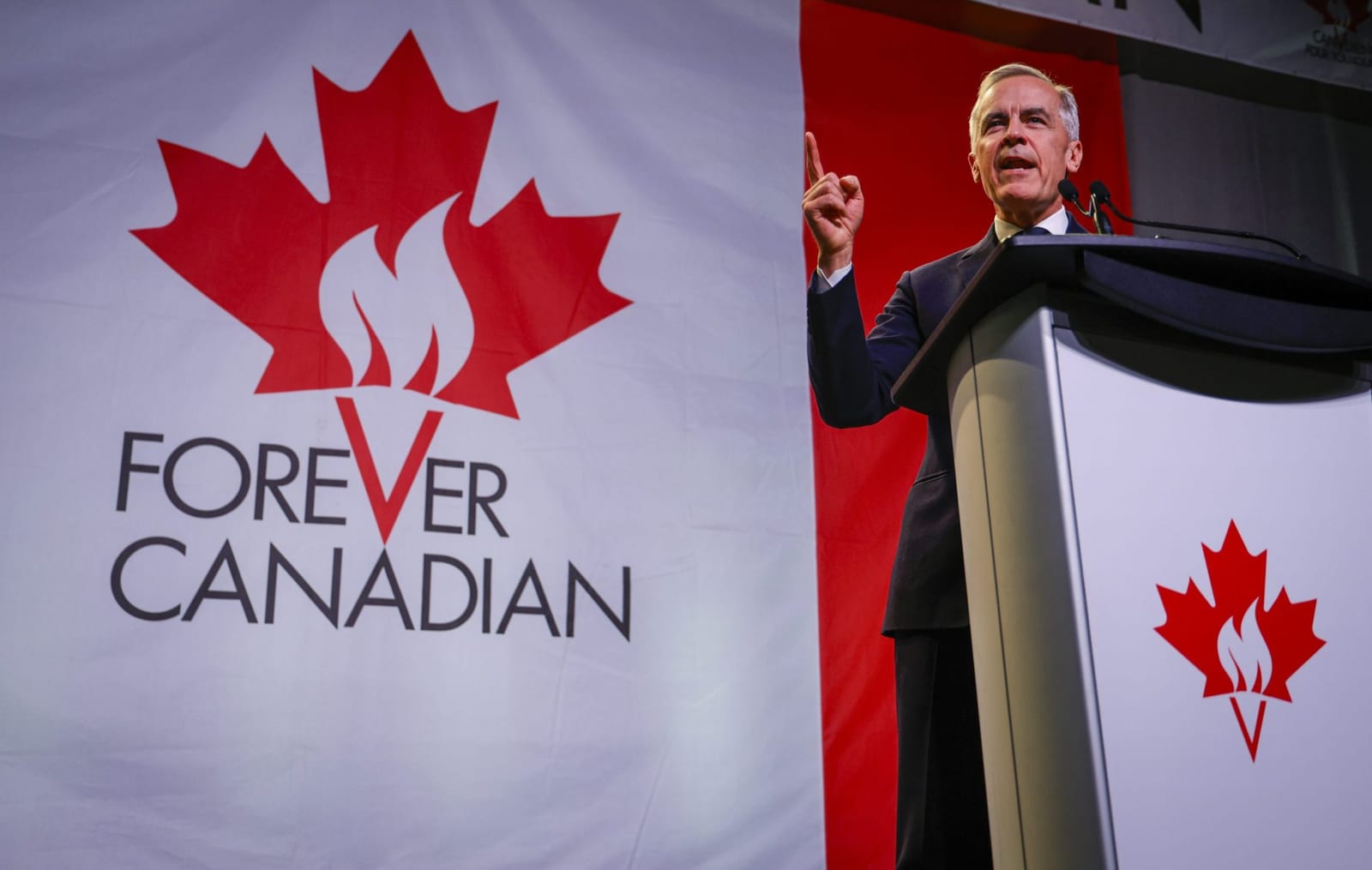
Carney had travelled to Alberta seeking a much broader rejection of the referendum. On October 15, four days before voting day, he visited Cinnamon Indian Cuisine in northeast Calgary and appeared on Punjabi-language RedFM. During his Calgary campaigning, he urged Albertans to vote “No to the Nine”, asking them to reject every other proposal on the ballot as well as the separation process. His intervention went well beyond defending Confederation. He wanted voters to refuse the immigration restrictions and additional provincial authority being proposed within it.
The immigration results frustrated that ambition. About 55 percent supported greater provincial control over immigration and first priority for Albertans seeking new jobs. The proposal requiring proof of citizenship in provincial elections drew roughly 58 percent, while the three measures restricting access to provincial services led with about 52 to 53 percent. Each reached well beyond the quarter who supported starting the separation process. Carney cannot claim those voters’ attachment to Canada as an endorsement of his immigration policy when majorities backed all five measures he had asked them to reject.
His blanket instruction nevertheless offered a convenient answer to an unusually difficult ballot. The ten questions ran to more than 400 words, much of it legal and constitutional language that required careful reading even from people fluent in English. Carla Hudson Kam, the head of linguistics at the University of British Columbia, told CBC she had to read several questions repeatedly despite having a PhD. A readability test placed Question 8 and the separation question at a college-graduate level. Elections Alberta supplied voting guides in 27 languages, but the ballots were in English and election officers could not translate or interpret the questions. Voters could use their phones or bring someone to help them understand and mark their ballots, leaving considerable room for whoever supplied the explanation to shape their understanding of the choices.
Alberta’s ballots should be in English. I would accept French alongside it as Canada’s other official language, but I see no reason to print a Canadian referendum in Punjabi, Arabic or every other language brought here through immigration. We should be able to write questions in plain English without requiring a university education to untangle them. We should also expect people who settle in Canada to learn an official language. Treating permanent dependence on translation as an acceptable arrangement leaves people relying on others to explain decisions they are supposed to make for themselves.
The 2021 Census counted 65,705 Alberta residents who could not carry on a conversation in either English or French. Conversational ability would itself have been little preparation for some of these questions, so that figure cannot capture the full difficulty. Five more years of mass immigration have followed, yet we are still using a count from 2021 to describe the language problem. Legal immigration should be sharply reduced and accompanied by mandatory language and integration requirements. People making their lives here should be expected to understand enough of the country to reach their own political judgments.
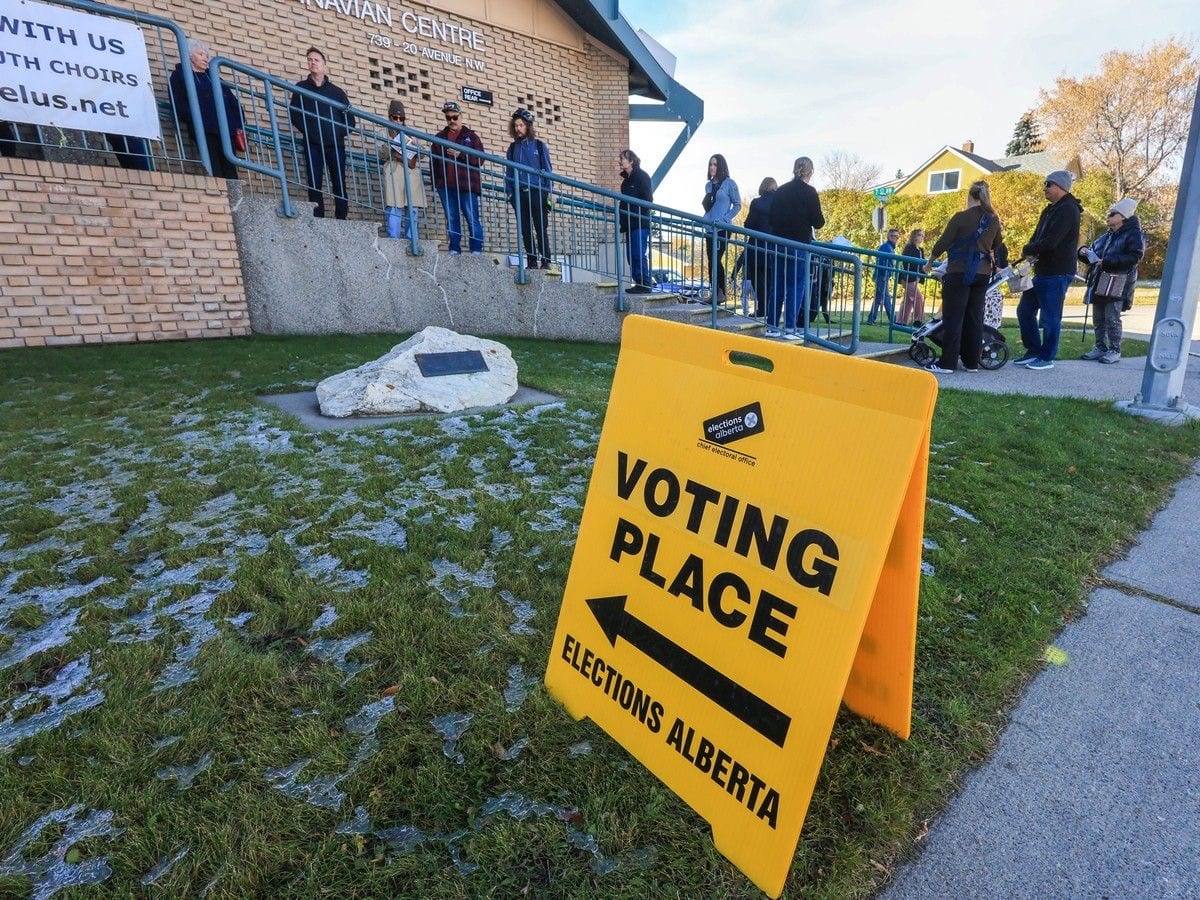
When I went to vote, I saw people who could not speak English being allowed to cast ballots even though they could not answer a verbal question confirming that they were over 18. Elections Alberta should explain how eligibility was established when that exchange could not be completed. Its identification rules establish a voter’s name and address; an Alberta driver’s licence can satisfy those requirements without proving Canadian citizenship. Question 5 would require documentary proof of citizenship in future provincial elections. It received the strongest support of the five measures, giving the government public backing to demand evidence that the present identification rules do not require.
Against that background, the usefulness of “No to the Nine” is easy to see. A person struggling to understand the ballot could follow one instruction from the prime minister without working through the difference between restricting access to provincial services and giving provincial laws priority over conflicting federal laws. I suspect that shortcut carried particular weight among immigrants with limited English who depended on Carney or a trusted community figure to explain what was at stake. Carney took his appeal to Punjabi-language media, while the National Council of Canadian Muslims urged opposition to restrictions on newcomers’ access to provincial services. Complicated wording gave political leaders and community organisations more influence over how voters understood the questions.
Stronger language requirements would help new citizens assess those appeals themselves, although the ethnic voting blocs cultivated by Canadian parties would survive a language test. Immigration has political consequences that extend far beyond an employer’s immediate demand for workers. Permanent residents who become citizens acquire the vote, and their Canadian-born children eventually reach voting age. Ministers setting admissions levels are therefore helping shape the electorate in which their parties will compete for years to come. Their preference for discussing labour shortages does not remove that political interest.
In 2021, visible minorities comprised roughly 28 percent of Alberta’s population and Indigenous peoples 6.8 percent, with most of the remainder of European background. Those provincial figures are now five years old and cannot describe the pace of change in particular neighbourhoods. For white residents who feel they have become a minority where they live, the change is already part of daily life. As immigration expands some communities faster than others, the established European-descended and Indigenous populations also become a smaller share of the electorate than they otherwise would have been. Ottawa’s admissions decisions keep affecting that balance long after the ministers who made them leave office.
Much of the change is concentrated in Calgary and Edmonton, where immigrants already made up 31.5 percent and 26 percent of the metropolitan populations respectively in 2021. Both cities voted much more heavily to remain in Canada than the rural constituencies where the separation process found greater support. Parties have spent years competing for immigrant communities, and Canadian election research has examined both the historic Liberal advantage among non-European immigrants and its subsequent erosion. Carney’s Calgary appearances belong to that continuing competition. The federal government helps determine the scale of immigration while the party governing it seeks support in the communities growing as a result.
The immediate question is what Alberta’s government intends to do with the votes it received. The count used here had about 98 percent of voting locations reporting on separation, with several other counts less advanced. Some outstanding locations were in rural constituencies more sympathetic to starting the separation process, but there was no plausible route from the remaining ballots to overturning a provincial defeat of three to one. The much closer votes on Senate abolition and priority for provincial laws still warranted attention. Elections Alberta is counting all ten ballots by hand and has set October 29 for publication of the official results. Each proposal will need to be judged by its own result.
Once the immigration majorities are confirmed, Alberta should pursue those measures without making them dependent on another separation campaign. Attaching the two would require people who supported restrictions to reopen a constitutional fight they have just rejected. The government can introduce legislation where the province has authority and make specific demands where Ottawa’s agreement is needed. It should have to account for each proposal rather than use the separation defeat to excuse abandoning measures that won support.
That scrutiny needs to begin with the wording ministers left unresolved. Question 2 would restrict provincially funded programs to citizens, permanent residents and people with an “Alberta-approved immigration status.” Ministers could preserve much of the access voters thought they were restricting simply by defining that last category broadly enough. They need to say who would qualify and on what grounds before claiming to have carried out the public’s wishes. A new label attached to substantially the same eligibility rules would accomplish very little.
The twelve-month waiting period for people with non-permanent status also needs rules explaining when it begins and how it will be enforced. The proposed health and education charges require actual fees and published exemptions, covering those residents’ use of the systems and their families’ use while preserving existing eligibility for citizens and permanent residents. Until the government supplies those details, Albertans cannot judge what will change. The employment proposal will be equally empty if an employer can claim to give Albertans priority and then hire as before. People passed over for work need to know what obligation the law places on employers and how they can enforce it.
None of these votes binds the government, so ministers remain free to delay the measures, narrow them or drop them altogether. The bills they introduce will tell us more than their speeches about respecting the result. If they invoke federal law as an obstacle, they should name the provision and publish the amendment or agreement they want Ottawa to accept. Carney would then have to answer a concrete demand backed by Alberta voters, while Smith would remain accountable for any provincial authority she chose not to use. He campaigned against all five immigration measures and failed to defeat them. If the same rules remain after the results are confirmed, Smith will have to explain why her government needed a referendum estimated to cost $130 million to obtain public backing for changes it then declined to make.